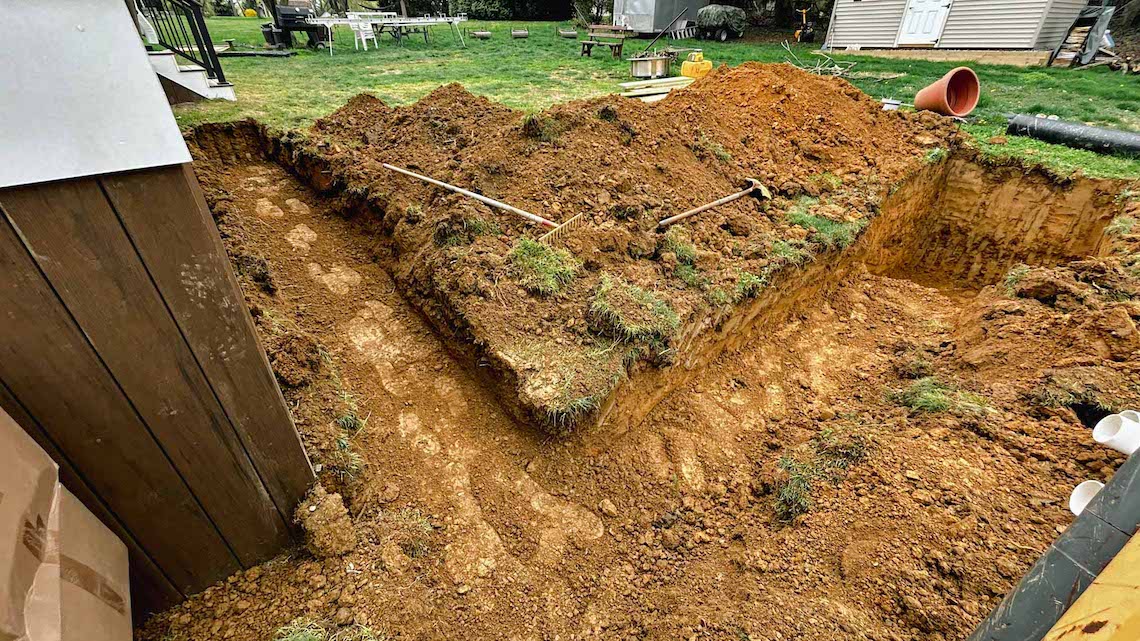
Plan your underground utility routes with clear guidance, coordinated excavation, and sitework that supports the whole property.
A new home, garage or pole barn may need water, septic piping or underground power. Getting those services where they belong takes more than choosing the shortest path. The building location, driveway, drainage, existing lines and installation requirements all matter.
BedRock provides utility trenching as part of a coordinated sitework plan. We help you understand the route, identify what needs to be confirmed, and organize excavation around the work that follows.
You can contact us before choosing a builder or finishing your plans. If you already have a utility layout or trade contractor involved, we can review how the trenching fits your project.
We consider the building, access, drainage and future improvements together, helping identify conflicts before excavation begins.
We help connect excavation with the requirements of the plumber, electrician, designer or utility provider involved in the project.
We discuss backfill, grading and restoration in the proposal so you understand what happens after the underground work is complete.
We excavate planned water-line routes, coordinating the trench with the required depth, access and installation needs. Pipe installation, testing and connections should be clearly assigned in the project scope.
We coordinate trenching with the approved septic layout, home location and wider sitework. For a complete new-home system, explore our septic system installation service.
Depending on the project, we can excavate routes for underground electrical service or conduit. The electrician and utility provider establish their installation requirements.

Plan underground routes before a new driveway, foundation or finished landscape makes access harder. Consider where equipment will travel, how the property will drain and whether future buildings need space for services.
Still working through the layout? Our site planning and design service can help connect the early decisions. For runoff problems rather than utility service routes, explore drainage and erosion control.
We discuss what you are building, which services are needed, the proposed route, access and known site conditions.
We coordinate the excavation scope with the relevant plans and professionals, including utility locating, installation requirements, permits and inspection responsibilities.
We excavate the agreed route around the installation sequence. Required checks and inspections need to happen before the trench is closed.
Backfill, compaction, grading and surface restoration follow the requirements and scope set out in your proposal.
We’ll review your utility routes and the sitework you need, then define BedRock’s role alongside your plumber, electrician or other trades. Your proposal will clarify what’s included, from excavation and backfill to the agreed finish, and what others will handle.
We’ll also discuss site conditions that could affect the work, including rock, unsuitable material or route changes, so you understand the scope before work begins.

On a published pole-barn garage project, BedRock excavated a dedicated trench between the existing house and the new garage for an electrical line. The wider project included grading, drainage, stone placement and a timber retaining wall.
That is the value of planning the utility route with the sitework: the underground work is considered alongside the building, access and finished property.
Needing a pad to park my motor home , I reached out to a few contractors for quotes. Bedrock were the only ones that replied and with a reasonable quote. We scheduled... read more the work, and a week early they called to see if they could do it early (what contractor ever is early). They did the job in a few hours, and I am very pleased. The final product exceeded my expectations for sure. The motor home is not in the mud, but on it's driveway. Definitely would hire them again if/when I need to.

The team at BedRock was very professional from start to finish. They installed a one hundred fifty foot dry stream bed for drainage on our property. They worked with... read more us on a design, provided an estimate in a timely manner and were out early to work each day. For each step of the project, there was clear communication of what would be completed. They worked with us to position and sometimes reposition boulders to our liking. They left the work area clean each day. We were very satisfied and would highly recommend BedRock for outdoor projects
We serve southeastern Pennsylvania and established service areas in Maryland, Delaware and New Jersey. Tell us your project location and the trenching you need so we can confirm availability and review the scope.
Mid-Atlantic team: (717) 587-7062

FAQs About Utility Trenching
Yes. Early sitework input can help you think through the building location, utility routes, access, drainage and construction sequence before major decisions are fixed. If plans or trade contractors are already in place, we can work with that information too.
Our utility trenching scope can include water and septic piping routes, along with electrical routes where applicable. We review the property and installation requirements before defining the work. Complete septic installation is addressed through our new-home septic service.
Not automatically. Excavation, pipe or conduit placement, trade work, testing and final connections are separate responsibilities that need to be identified in the proposal. We help coordinate the sitework, but trenching alone should not be treated as a complete utility hookup.
There is no single dimension for every utility. The service type, installation method, required cover, pipe grade, soil conditions and applicable utility or local requirements determine the trench. Confirm those requirements for the specific project rather than using a general depth from another property.
Sometimes, but do not assume they can. Separation, bedding, access and inspection requirements depend on the utilities involved and the applicable rules. The route should be reviewed with the relevant providers and installation professionals before excavation.
The route, installation requirements, utility locating, permits and responsibilities need to be confirmed. Tell us about known underground lines, including services between buildings. In Pennsylvania, the Public Utility Commission directs homeowners and contractors to contact 811 at least three business days before digging. Requirements elsewhere vary, and locating is one part of preparing for excavation, not a substitute for a complete site review.
Length, depth, rock, groundwater, equipment access, crossings, existing utilities and restoration all affect the work. Permits, locating, inspections, weather and the installation schedule can also affect timing. A route crossing finished pavement may need a different approach from one through open ground; any alternative method needs its own scope and qualified provider.
Backfill, compaction, grading and restoration can be included in the agreed sitework. Confirm the materials, required inspections and intended finish in your proposal. Lawn restoration, gravel and paved surfaces involve different work, so the finish should be specified before excavation begins.
Tell us what you are building, where the utilities need to go and what questions you still have. Whether you are exploring a property or coordinating an active build, BedRock can help you understand the next step.
For the wider excavation scope, see our excavation and site preparation services.